29/02/2012

Spring Term: Session 4


Coming to terms with the digital

A discussion on representations of the digital in contemporary American culture

6-8pm, Wednesday 7th March
Senate House, Room 261

This session will take the form of a seminar introduced and led by Zara Dinnen (PhD candidate, Birkbeck). The title of the session is a play on the title of a 2011 Guardian article by the American author and critic, Laura Miller. The article, 'How novels came to terms with the internet', thinks through some of the reasons why digital culture (particularly the Internet) is so conspicuously absent from recent American fiction -- (excl. SF, or SF-themed novels). The aim of this seminar is to expand and reify the terms Miller calls to account. The central question being asked then is, how is American culture representing its own encounters with the digital? Up for discussion are what the terms of this question actually denote; how might we begin to define and limit such terms as: ‘American culture’, ‘digital era’, ‘digital culture’, ‘contemporary America’, ‘new media’? Whilst no definitive answers are likely please come and join the discussion!

Suggested reading:

Kirschenbaum, Matthew G., Mechanisms: New Media and the Forensic Imagination (Cambridge, MA: MIT Press, 2008). PDF of the introduction available here.

Miller, Laura, 'How novels came to terms with the internet,' Guardian (15th Jan 2011). Available here.

Worden, Daniel, 'Late Postmodernism' [a review of Phillip E. Wegner's book Life Between Two Deaths, 1989-2001: U.S. Culture in the Long Nineties (Durham, NC: Duke University Press, 2009)]. Available here.


14/02/2012

Spring Term: Session 3


Examined Life
DVD Screening

6pm, Wednesday 15th February
Senate House,
*** Room G35 (please note room change) ***

“The unexamined life is not worth living.”
—Socrates

Examined Life pulls philosophy out of academic journals and classrooms, and puts it back on the streets...

In Examined Life, filmmaker Astra Taylor accompanies some of today’s most influential thinkers on a series of unique excursions through places and spaces that hold particular resonance for them and their ideas.

Peter Singer’s thoughts on the ethics of consumption are amplified against the backdrop of Fifth Avenue’s posh boutiques. Slavoj Zizek questions current beliefs about the environment while sifting through a garbage dump. Michael Hardt ponders the nature of revolution while surrounded by symbols of wealth and leisure. Judith Butler and a friend stroll through San Francisco’s Mission District questioning our culture’s fixation on individualism. And while driving through Manhattan, Cornel West—perhaps America’s best-known public intellectual—compares philosophy to jazz and blues, reminding us how intense and invigorating a life of the mind can be. Offering privileged moments with great thinkers from fields ranging from moral philosophy to cultural theory, Examined Life reveals philosophy’s power to transform the way we see the world around us and imagine our place in it.

Featuring Cornel West, Avital Ronell, Peter Singer, Kwame Anthony Appiah, Martha Nussbaum, Michael Hardt, Slavoj Zizek, Judith Butler and Sunaura Taylor.

All are welcome to attend.

19/01/2012

Spring Term: Session 2


'Reflections on a Future Nostalgia: Exploring Andrei Tarkovsky's Film Image and its Expansion through Contemporary Art'

Dr Kristen Kreider (Royal Holloway)

6-8pm, Wednesday 1st February, Senate House, Room 261 (2nd floor)

'Time is a state: the flame in which there lives the salamander of the human soul.'-- Andrei Tarkovsky, Sculpting in Time

In this seminar we will explore Andrei Tarkovsky’s theory and practice of the film image, ultimately suggesting its expansion through contemporary art practice. How does Tarkovsky’s film image generate a complexity of meaning through its relation to the artistic symbol, the poetic image, time, place and the viewer? In doing so, how does it evidence a nostalgic impulse? How can one identify the critical and creative potential of this nostalgic impulse? Finally, how do certain contemporary art practices, expanding the complexity of meaning in Tarkovsky’s film image in order to exploit this critical and creative potential, indicate the futurity inherent in Tarkovsky’s ‘nostalgic’ film image? This exploration will take the form of a paper and film screening of Gorchakov's Wish (Kreider + O'Leary, 2011).

Dr. Kristen Kreider is a Lecturer in Creative Writing (Poetry) at Royal Holloway, University of London. Since taking this position in 2008, she has sought to promote an interdisciplinary, socially engaged approach to contemporary poetry and poetics, and to encourage a rigorous dialogue between creative and critical practice. Situating her own research in the expanded field of contemporary writing and text-based art practice, Kristen is currently completing a monograph entitled Poetics and Place: The Architecture of Sign, Subjects and Site (I.B. Tauris, forthcoming).

As a pracitioner, Kristen collaborates with architect James O’Leary. The work of Kreider + O’Leary engages with the particularities of a given site – be this a physical, architectural location or more abstract locus of creative intent – in order to open up meaning. The work takes on many forms including performance, installation and time-based media and has been exhibited in the UK as well as internationally in Europe, Australia, Japan and the United States.

http://www.kreider-oleary.net/

Recommended Reading/Viewing

- Tarkovsky, Andrei. ‘The Film Image’ (exct). Sculpting in Time: Reflections on the Cinema. Trans. Kitty Hunter-Blair. Austin: U of Texas Press, 1986. 104-24.

- Tarkovsky, Andrei, dir. Nostalghia (1983).

All welcome.

14/01/2012

Spring Term: Session 1


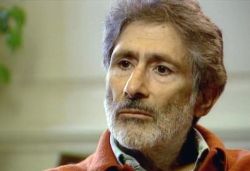
Edward Said: The Last Interview
DVD screening

6pm, Wednesday 18 January
Senate House, room 261

Filmed within three days in 2002, just one year before his death at the age of 67, Edward Said: The Last Interview is a compelling portrait of a man who was not only a strong advocate of the Palestinian cause, but an accomplished teacher, literary critic, writer and musician. After living for more than ten years with a fatal strain of leukemia, which he was diagnosed with in 1991, Said refused interviews.

However, former student D.D. Guttenplan along with director Mike Dibb convinced him otherwise. This no-frills documentary does not include archival footage to contextualize the speaker and his life; it simply records the casual conversation between Said and British journalist Charles Glass that weaves in and out of Said’s childhood, writing, life as an academic, involvement with Yasser Arafat, and his strong opinions on the Palestinian-Israeli conflict. (electronicintifada.net)

All welcome.

31/10/2011

2nd Session (15 November)


The Prison-House of Agency:
Neoliberal Hegemony and Popular Aesthetics in Britain and the US

Dr Jane Elliott
(King's College London)

6-8pm, Tuesday 15th November
Stewart House, room ST271 (2nd floor)

Dr Jane Elliott is Senior Lecturer in late 20th and 21st Century Literary and Cultural Studies. She is also Humanities Editor for The Public Intellectual journal. Dr Elliott's research focuses on post-1945 fiction, contemporary theory and the novel during and after postmodernism. Her recent publications include Theory After 'Theory', co-edited with Professor Derek Attridge (London: Routledge, 2011) and the monograph Popular Feminist Fiction as American Allegory: Representing National Time (Basingstoke: Palgrave, 2008).

Her current research explores the conjoined aesthetic and political developments that have emerged since the turn of the 21st-century and the waning of the postmodern moment. Dr Elliott is currently working on a monograph that explores the intersection of neoliberal microeconomics, popular aesthetics and the Left theorization of agency in a variety of American and British novels and films, from the novel and film Never Let Me Go to the horror franchise Saw to Hurricane Katrina documentaries.

Recommended Reading:

Michel Foucault, The Birth of Biopolitics: Lectures at the Collège de France, 1978-1979, trans. Graham Burchell (New York: Palgrave, 2004). Chapter 11, "28 March 1979," pp. 267-289.

Nikolas Rose, Powers of Freedom: Reframing Political Thought (Cambridge: Cambridge University Press, 1999). Chapter 2, "Freedom," pp. 61-97.

Laurent Berlant, ‘Cruel Optimism: On Marx, Loss and the Senses’, New Formations 63 (Winter 2007/2008): pp. 33-51.

All are welcome to attend.

31/05/2011

1st Session (October 18th)


Seeing Socialism: The Aesthetics of the Plan and the Transparency of Politics

Dr. Alberto Toscano
(Goldsmiths, University of London)


6-8pm, Tuesday 18th October
Senate House, Room 264 (2nd Floor)

Dr. Alberto Toscano is Senior Lecturer at Goldsmiths, University of London, and is perhaps best know for his numerous translations of the work of Alain Badiou. A cultural critic and a philosopher, Dr. Toscano has published books on the philosophical problem of individuation -Theatre of Production: Philosophy and Individuation between Kant and Deleuze (Basingstoke: Palgrave, 2006)- and on the different readings and misreadings of the concept of fanaticism -Fanaticism: The Uses of an Idea (New York: Verso, 2010)-, as well as authoring articles on a diverse number of topics.

His recent work, from which this talk stems, is on the contemporary status of what Fredric Jameson refers to as 'cognitive mapping.' The project, which is soon to be published as a co-authored book entitled Cartographies of the Absolute (Zero Books), considers contemporary representations of capitalism in film and the visual arts. He is currently working on the relationship between art, political aesthetics and socialist planning, both in the revolutionary art of the 20s and 30s and in later critical debates about communism and 'transparency.'

Recommended reading:

Clark, TJ, Farewell to an Idea: Episodes from a History of Modernism (New Haven: Yale University Press, 1999), Chapter 3.

Stites, Richard, Revolutionary Dreams: Utopian Vision and Experimental Life in the Russian Revolution (Oxford: Oxford University Press, 1989), Chapters 7 and 8.

Michelson, Annette (Ed.), Kino-Eye: The Writings of Dziga Vertov (London: Pluto Press, 1984), Dziga Vertov's film manifestos.


All are welcome to attend.

30/05/2011

Session 2: Excrementality (Tuesday 7th June)


‘Excrementality’ in the movies: Can Hollywood be ‘incoherent’?

Dr. Dan Varndell (Southampton and Winchester)

6-8pm, Tuesday 7th June
Senate House, room G37 (ground floor)


Every Hollywood movie, asserts Andrew Britton, in whatever genre, “must at least allow for a conservative reading" (1991:201). However, since Robin Wood coined the term "excremental city" to describe so-called "incoherent" texts (like Taxi Driver) that refuse any meaning (conservative or otherwise), Film Theory has been guilty of ignoring certain "excremental" readings of popular cinema. “Postmodernity", write George Ritzer and Douglas Goodman, “is "in" the modern in another sense altogether. It is something like the food of the modern, but that part of the food that is indigestible, which cannot be easily incorporated into the system of modernity" (2002:151n). After well over a century of forms, perhaps cinema is no longer the modern machinery through which our postmodern desires are indulged.

This seminar seeks to explore cinema as a model for cultural repression using the metaphor of the flushing toilet, and investigates Hollywood "incoherence" as its excremental remainder, provoking several questions for discussion: Can Hollywood films be incoherent, or must they always allow for a conservative meaning? Can Wood's cinematic excrescences be considered the postmodern "bones" stuck in the throat of the modern itself? This provocation encourages an open and fluid discussion of excremental Hollywood, inviting cinematic examples from big-budget Blockbusters to Vietnam War films to engage fully the question of where our cultural waste really goes in the movies.


Recommended reading:


- Corrigan, Timothy, 1991. "The Incoherent Text", in A Cinema without Walls: Movies and Culture After Vietnam (New Brunswick & New Jersey: Rutgers University Press), Chapter 2 - "Illegible Films: Texts Without Secrets," pp. 51-79.

- Wood, Robin, 1986. "Illegible Films: Texts without Secrets", in Hollywood from Vietnam to Reagan (New York, Chichester & West Sussex: Columbia University Press), Chapter 4 - "The Incoherent Text: Narrative in the 70s," pp. 46-55.


All welcome, any discipline.

N.B. Those of a mild disposition should note that toilet humour is probable.

14/05/2011

Session 1: Interculturalism (Wednesday 25th May)


Interculturalism

Wednesday 25th May, 6-8pm


Senate House, room 104 (first floor)


**PLEASE NOTE ROOM CHANGE**


"Interculturalism and performance is perhaps the most talked about and controversial cultural practice of the late twentieth and early twenty-first century, characterising at best a sharing and mutual borrowing of the manifestation of one theatre practice by another. At worst it features the annihilation of indigenous pre-modern practices by a rapacious ‘First World’ capitalism." - Brian Singleton, 2003.


"[P]rocesses of exchange between cultures have been going on at least since the onset of modernity and, as a result, cultures permanently undergo change and transition. This situation renders any attempt to draw a clear line between ‘ours’ and ‘theirs’ futile. Yet, this is not to say that differences between cultures do not exist. The differences are simply not fixed and given once and for all; they are permanently generated anew.
" - Erika Fischer-Lichte, 2009.

A heated controversy around intercultural performance has dogged theatre scholarship since the 1970s. Recently, however, there has been an attempt to move away from the term ‘intercultural’ and all it connotes. But what exactly is interculturalism and why has it been so contentious?


This session will begin with a presentation by Emer O’Toole (RHUL). Engaging with contemporary examples of theatre practice, she will ask whether intercultural tensions are truly dissolving or if they are being swept conveniently under the carpet. Emer is a PhD Candidate in the Department of Drama and Theatre at Royal Holloway. Using postcolonial theory, her thesis tackles the intercultural debate by suggesting that there is a relationship between rights of representation, the socio-political effects of a performance, and collaborators’ agency.


Recommended Reading


Schechner, Richard, "A Reply to Rustom Bharucha," Asian Theatre Journal, Vol. 1, No. 2 (Autumn, 1984), pp. 245-253.

Bharucha, Rustom, "A Reply to Richard Schechner," Asian Theatre Journal, Vol. 1, No. 2 (Autumn, 1984), pp. 254-260.


Supplementary Reading


Fischer-Lichte, Erika, "Interweaving Cultures in Performance: Different States of Being In-Between," New Theatre Quarterly, Vol. 25, No. 4 (November 2009), pp. 391-401.

All are welcome to attend.